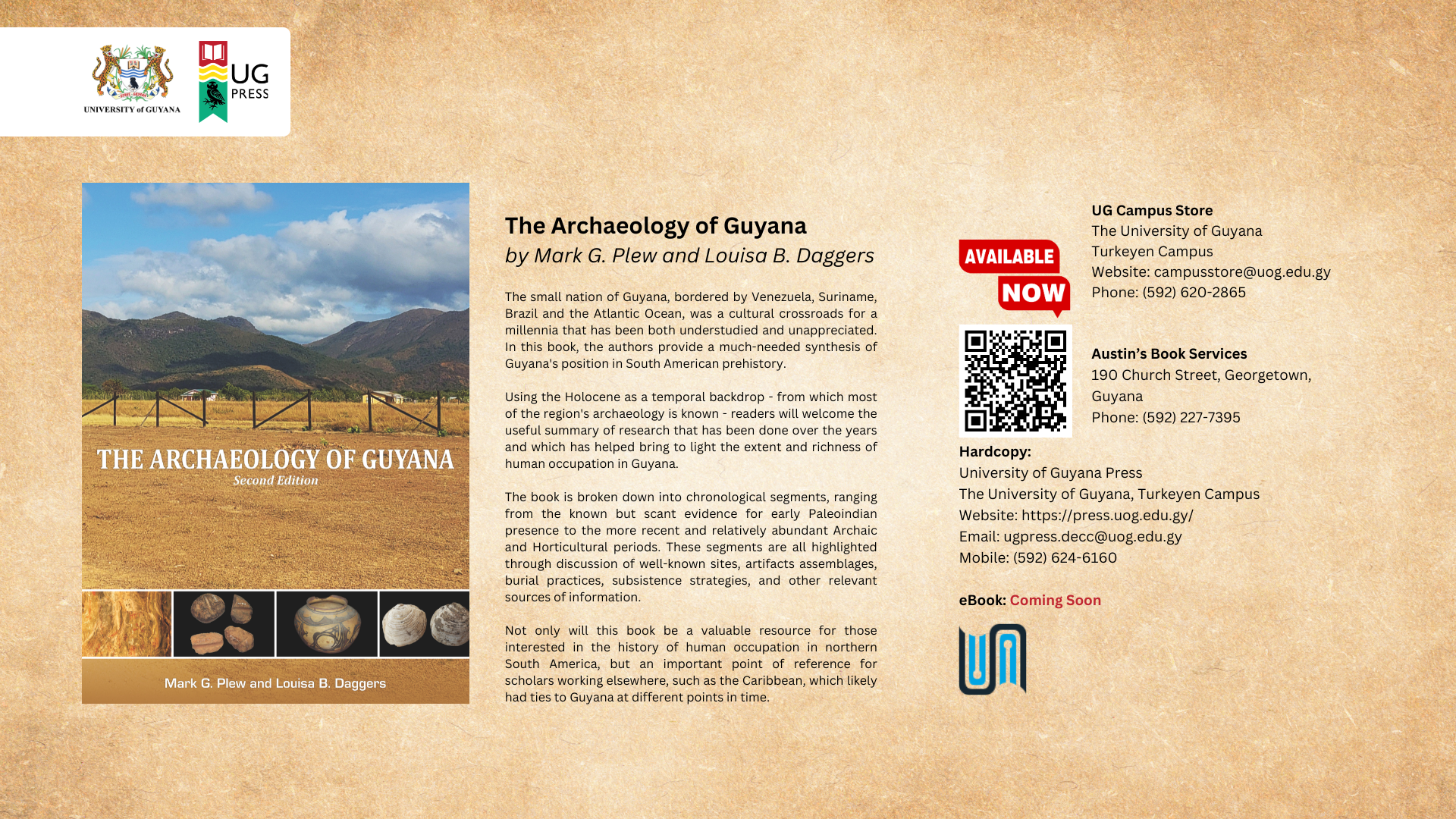
The small nation of Guyana, bordered by Venezuela, Suriname, Brazil and the Atlantic Ocean, was a cultural crossroads for a millennia that has been both understudied and unappreciated. In this book, the authors provide a much-needed synthesis of Guyana's position in South American prehistory. Using the Holocene as a temporal backdrop - from which most of the region's archaeology is known - readers will welcome the useful summary of research that has been done over the years and which has helped bring to light the extent and richness of human occupation in Guyana. The book is broken down into chronological segments, ranging from the known but scant evidence for early Paleoindian presence to the more recent and relatively abundant Archaic and Horticultural periods. These segments are all highlighted through discussion of well-known sites, artifacts assemblages, burial practices, subsistence strategies, and other relevant sources of information. Not only will this book be a valuable resource for those interested in the history of human occupation in northern South America, but an important point of reference for scholars working elsewhere such as the Caribbean, which likely had ties to Guyana at different points in time.